Hanover AI Conference Asks What Stays Human
Dartmouth hosts a three-day event 70 years after the term was coined, featuring Sen. Kirsten Gillibrand and student proposals for religious values in code.
By Ana Salazar ·
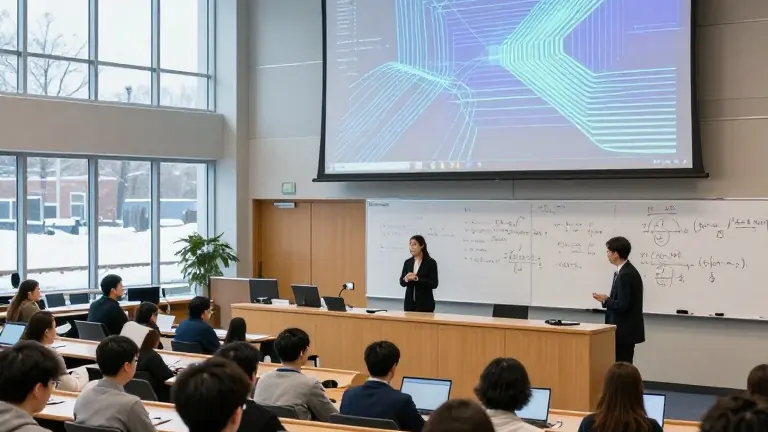
The phrase “artificial intelligence” first appeared at a Dartmouth College gathering 70 years ago, and the campus in Hanover, New Hampshire, now hosts a three-day conference titled “What must remain human?”
The event, labeled “AI at 70,” opened Thursday with discussions on the boundaries between machine logic and human judgment. Peter Chin, a Dartmouth engineering professor, organized the summit to revisit the origins of the field established during the 1956 Dartmouth Summer Research Project. That earlier project sought to determine if machines could solve problems historically reserved for human minds.
New York Sen. Kirsten Gillibrand, a 1988 Dartmouth graduate, spoke at the conference about the need for stronger oversight. Gillibrand argued that current regulation lags behind technological speed, noting that machines lack empathy, guilt, and emotional distress. She called for a global AI summit and stated that Congress made an error by failing to regulate the internet twenty years ago.
Students at Dartmouth are also proposing frameworks for AI development. Dhruv Gupta, a freshman, is collaborating with the Deliberative Democracy Lab Artificial Intelligence initiatives at Stanford University. Gupta aims to identify core values shared by the world’s five major religions and embed them into AI systems. He described these shared values as a potential constitutional foundation for artificial intelligence.
Chin emphasized the goal of preserving human centrality in a rapidly changing technological environment. He stated that the conference seeks to ensure that the value of each human being is not lost amid rapid progress.
The “AI at 70” conference concludes Saturday with a full-day hackathon involving students.
The 1956 Dartmouth Summer Research Project remains a key reference point for the history of computer science.
Source: WCAX-TV