NATO Drafts Plan to Strike Deep Inside Russia
The alliance is moving beyond border defenses to target Russian military infrastructure in a strategy endorsed by top commanders.
By Ana Salazar ·
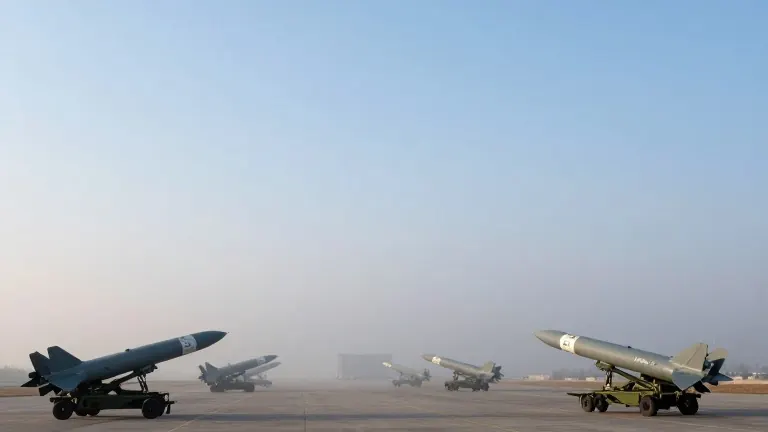
NATO is drafting a new defense strategy that would allow member states to launch conventional strikes deep inside Russian territory. The plan marks a shift away from decades of passive border defense toward active engagement with the Kremlin's military capabilities. This development comes as the alliance reassesses its methods for countering potential Russian escalation following nearly five years of war in Ukraine.
Supreme Allied Commander Europe Alexus Grynkewich has outlined this approach in his "theory of victory." The doctrine involves blocking the initial wave of an attack and then destroying the enemy's ability to sustain the push. Grynkewich stated that allies will break the warfighting system by hitting advancing forces along with the infrastructure that supports and controls them. The plan does not include a transition to nuclear weapons.
Polish Major General Ireneusz Nowak emphasized that modern defense requires striking back. He noted that the alliance must treat deep precision strikes as a form of deterrence. Nowak said, "We definitely would want to strike the defense-industrial base in a fight with Russia." He added that the message to Moscow must be clear: "Don't do anything stupid, because we can punish you. But to be credible, we need to have those capabilities."
The strategy mirrors tactics currently used by Ukraine, which targets Russian oil refineries, drone factories, data centers, and fuel depots with long-range drones and missiles. Ukraine's ambassador to NATO, Alyona Getmanchuk, described air defense as a painkiller that eases symptoms while the source of the pain remains unaddressed. She argued that targeting the source is essential for long-term security.
To implement this doctrine, the United States is modernizing and replenishing stocks of Tomahawk cruise missiles and ATACMS ballistic missiles. European partners are working to expand stockpiles of Storm Shadow/SCALP and Taurus cruise missiles. They are also developing new low-cost long-range strike systems to ensure sufficient inventory for a potential high-intensity conflict.
Fabian Hoffmann, a senior researcher at the Norwegian Institute for Defence Studies, noted that at least 48 projects for creating low-cost cruise missiles have been announced in Europe. He observed that nations do not want to be caught in a conflict where their adversary possesses deep arsenals of long-range strike capabilities while they lack similar options.
Military strategists concluded that a potential Russian invasion cannot be stopped solely by impeding troop advances. The new approach requires active prevention, or denial, of the enemy's ability to operate effectively. This includes hitting military bases, supply depots, and industrial facilities on Russian home ground.
Source: Ukrainska Pravda
More Politics · World news · Report a business · Got a Story?