Afghan Farmers Return to Poppy as Food Prices Squeeze Families
Cultivation has quadrupled since last year, according to UN data, as drought and low crop yields make legal farming unsustainable for many households.
By Fiona Wallace ·
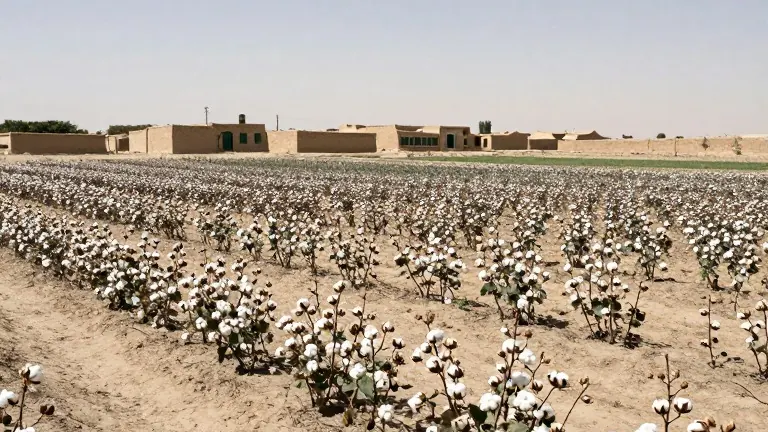
In Baba Yusuf, a village in Balkh province, a 28-year-old farmer named Mohammad Dawood spends his days tending to wheat and cotton. He says these crops yield one-fortieth of the income his family once earned from poppy. "Now, my children are malnourished," Dawood said in his home, where carpets and mirrors from a wealthier era still hang on the walls.
The Taliban began enforcing a strict opium ban four years ago, which nearly eliminated poppy from Afghan fields. However, the United Nations Office on Drugs and Crime reported on Thursday that cultivation has sharply increased this year. The agency estimates that 43,300 hectares of land are now planted with poppy, a figure that is more than four times higher than the 2025 count.
Farmers are hiding their poppy crops inside cereal fields and behind mud walls to avoid Taliban scrutiny. Polleak Ok Serei, the UNODC country representative for Afghanistan, stated that many farmers "don’t have any other choice than to go back to poppy cultivation." While this area was reported as poppy-free last year, Balkh province is seeing a resurgence of the crop.
The economic pressure on rural families is severe. UN agencies warned this month that 10 of the country's 34 provinces have reached critical levels of child malnutrition. They project that number could rise to 14 provinces by 2027. At the Alam Khil health center in Balkh, doctors attribute the rise in severe malnutrition cases primarily to declining farm income, despite better harvests in some areas.
Tahira, a local mother, waited for her 7-month-old son Benjamin to be treated for fever and diarrhea. Her husband grows cotton, but the family is struggling to make ends meet. "Our lives used to be good," she said. Salima Mohammadi, a nutrition nurse at the clinic, noted that agricultural yields have decreased year after year, leaving many families without a viable alternative to poppy.
Opium sales in Afghanistan generated an estimated $525 million this year, the highest amount since 2018. The Taliban rejected the UN findings, claiming actual cultivation was only half the reported estimate. They also cited the ban as a key achievement in their bid for international legitimacy. Amir Khan Muttaqi, the Taliban foreign minister, said that support for alternative livelihoods was essential to maintaining the campaign.
Drought has shrunk rivers and canals, leaving well water too briny for many crops. Cotton prices have dropped by about two-thirds due to a nationwide surplus, partly caused by Pakistan closing its border late last year. Gul Nazar, a 56-year-old landowner, said he would not grow poppy if his family’s conditions improved, but he warned, "When a person becomes hungry, they will do anything."
Pre-ban stockpiles of opium had previously cushioned global markets, but the UNODC warned that those reserves may be running out. Paddy Ginn, an analyst with the Global Initiative Against Transnational Organized Crime, said the combination of active trafficking networks and resilient smuggling operations creates a bleak outlook for global drug markets. The Taliban-run Interior Ministry did not respond to a request for comment.
Source: KELO