NASA Crew Completes 378-Day Isolation in Simulated Mars Habitat
Four analog astronauts exited a 3D-printed structure in Houston to provide data for future deep space missions.
By Jacob Reynolds ·
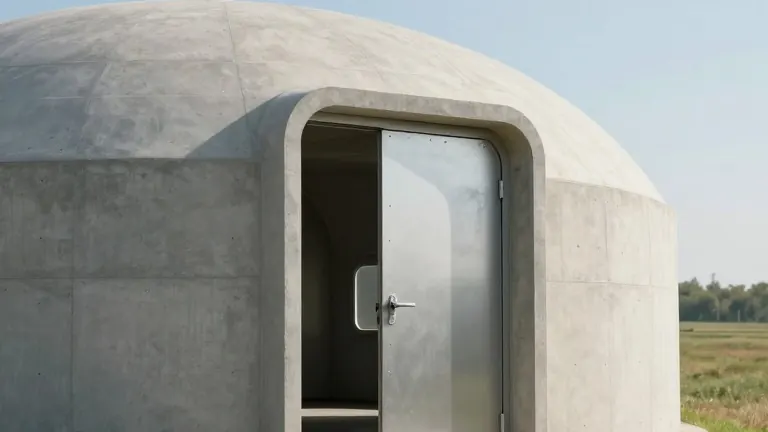
Four analog astronauts walked out of a 1,700-square-foot isolation facility at NASA’s Johnson Space Center in Houston on Saturday, ending a 378-day simulated mission to Mars. The crew, part of the Crew Health and Performance Exploration Analog program, spent more than a year living in a 3D-printed habitat designed to mimic the constraints of interplanetary travel. This effort is part of NASA’s preparation for potential human missions to the Red Planet in the 2030s.
The participants included medical officer Ellen Ellis, mission commander Ross Elder, science officer Matthew Montgomery, and flight engineer James Spicer. They entered the facility on October 19, 2025. During their time inside, they performed tasks such as growing crops in simulated Martian soil and communicating with ground control using time delays that replicate the distance between Earth and Mars. These delays require crews to operate with greater independence and patience, a skill set essential for astronauts traveling millions of miles from home.
Ellis described the experience as a year of voluntary captivity. She emphasized the urgency of maintaining American leadership in space exploration, citing the administration's push for a space service academy and lunar base plans. She urged leadership to prioritize science that benefits the economy and ensures a legacy for future generations. Elder, the mission commander, stated that while the risks for Mars are high, the goal of placing humans on the planet is achievable through strong vision, creativity, and hard work.
Vanessa Wyche, director of the Johnson Space Center, greeted the crew upon their exit. She noted that the team successfully managed limited resources and maintained their habitat while dealing with simulated communication lags. Wyche said the insights gained from this second CHAPEA mission will help inform the agency's upcoming plans to return astronauts to the moon, a milestone not achieved since 1972, and eventually Mars.
NASA has identified long-duration adaptation as a key research area. The agency seeks to understand how to keep astronauts healthy, productive, and connected during extended periods beyond Earth. The first CHAPEA mission, which also involved a four-person crew in isolation for 378 days, concluded in 2024.
The crew will now undergo two weeks of post-mission evaluations and debriefing sessions with NASA scientists. These assessments will analyze physiological and psychological data collected during the isolation period. The findings will contribute to the technical and operational standards required for future deep space exploration.
Source: KOYY