Tokyo Jury Chief Downplays New FIAPF A-List Status
Rolf de Heer argues that the official classification adds little to a festival already viewed as a top-tier industry event.
By Fiona Wallace ·
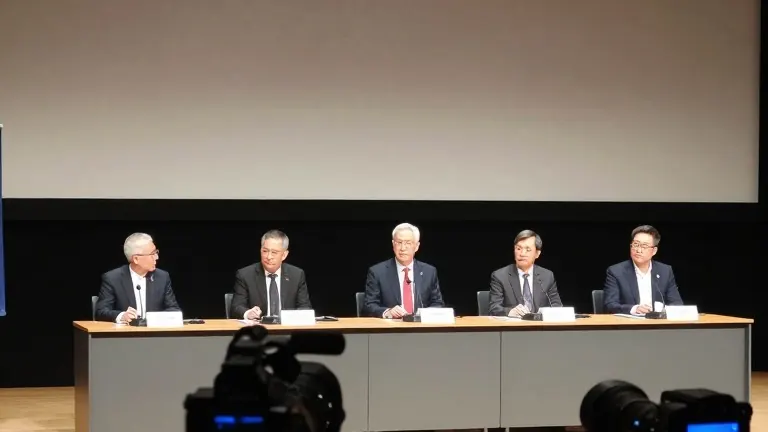
Rolf de Heer, the Australian director known for Ten Canoes and Bad Boy Bubby, told reporters on Tuesday that the Tokyo International Film Festival does not need a new label to validate its standing. De Heer leads the competition jury for the festival's 39th edition, which is currently underway.
The International Federation of Film Producers Associations, or FIAPF, recently overhauled its accreditation system. In March, the body replaced its four-category structure with a single list of 17 festivals. This new tier, referred to as the A-list, includes Cannes, Berlin, Venice, and Toronto. Busan and Shanghai also appear on the roster, with Busan and Toronto joining this specific grouping for the first time.
De Heer said the change feels redundant to most industry attendees. "I think Tokyo has always been considered one of those festivals by most people who attend festivals," he said during the jury press conference. "Tokyo was effectively an A festival. And so in that sense, I don't think it makes a lot of difference."
He conceded that the official title might help the festival attract higher-caliber submissions. "And so in that sense, it may help that it is officially now again A, but I don't think it changes the festival so much," he added. When a journalist pressed the issue, noting that the system creates a hierarchy among festivals, De Heer responded that it matters a great deal to some people and not at all to others.
Korean producer Oh Jungwan, who founded Bom Film Productions, agreed with the director's assessment. She described herself as not a film festival person and noted that audiences attend to watch movies, not to check rankings. "We just go to watch film and enjoy the feeling, the festival feeling," she said.
The other jurors did not discuss the accreditation changes. The panel includes Japanese actor Watanabe Makiko, producer Alex Lo of Cinema Inutile, and colorist Yov Moor. The group will select the winner of the Tokyo Grand Prix from 15 competition titles. The festival runs through Nov. 4.
De Heer also addressed the state of Australia-Japan co-productions. He stated that it often makes no sense for a Japanese film to shoot in Australia or vice versa. He contrasted this with Europe, where co-productions function well on a financial basis. De Heer said projects will succeed if a story naturally requires filming in both countries and if the scripts are right.
Alex Lo, whose film Heads or Tails? won the best director award at Tokyo last year, said producers in Europe, the U.S., and other regions are increasingly seeking co-production deals. He attributed this shift to a lack of local government support for filmmakers.
When asked how the jury would resolve disagreements, De Heer expressed confidence that the group could find a consensus. He predicted they would settle on a film that might not appeal to every member. Oh Jungwan, serving on a Tokyo jury for the second time, recalled a previous session where she argued for seven hours for a specific title. She said she hoped to avoid a similar battle with De Heer this year.
The five-member panel will deliberate after the screening period concludes. The final selection will determine the top prize for the 39th Tokyo International Film Festival.
Source: Variety
More Culture · National news · Report a business · Got a Story?