
Netanyahu Faces Defeat in Israel Election as Opposition Secures 61 Seats
A pledge to avoid governing with Palestinian-led parties complicates the path to a new government, potentially extending Netanyahu's caretaker status.
By Ana Salazar ·
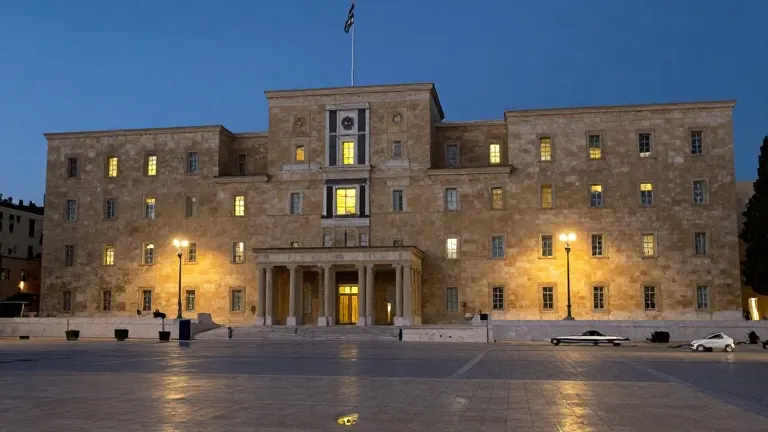
Israelis voted in a national election that stripped Prime Minister Benjamin Netanyahu of his governing mandate, handing a firm majority to his opponents. The results, confirmed as of October 28, signal a sharp turn away from the far-right coalition that has held power since 2022. Despite the numerical advantage for the opposition, internal disagreements threaten to stall the formation of a new cabinet.
The opposition bloc holds 61 of the 120 seats in the Knesset, a decisive majority. Netanyahu’s camp lost approximately 10 seats compared to its 2022 tally, reducing its standing in a parliament that has otherwise shifted further right. The center-left Democrats, led by Yair Golan, emerged as a key player in the opposition. Golan declared the prime minister's defeat, stating, "Netanyahu lost. I know how to count." He called for a government that includes Palestinian citizens, who constitute roughly 20 percent of the country's population.
A central obstacle to immediate governance is a pledge made by most Jewish opposition parties not to partner with Palestinian-led groups. This commitment gives Netanyahu a potential path to remain in office. He could serve as a caretaker prime minister for an extended period, increasing the likelihood of another round of elections. The strategy relies on the reluctance of Jewish parties to cross the ethnic divide, a dynamic critics argue was engineered to weaken the opposition.
Eran Halperin, a political psychology researcher, cited a survey taken as polls closed on election day. The data showed that a clear majority of opposition voters supported forming a government with the Palestinian-led Ra'am party. Halperin noted that public opinion appears ahead of party leaders. Opposition figures remained silent on Wednesday, weighing their desire to remove Netanyahu against their pre-election promises. Gadi Eisenkot, leader of the largest opposition party, has not ruled out a partnership directly but set conditions that make such a coalition politically difficult to achieve.
Palestinian political leaders have responded with optimism. Yousef Jabareen, head of the Joint List, stated his party is "ready and prepared to pave the way for the ousting of the Netanyahu government." He emphasized that change comes through Jewish-Arab partnership. The Ra'am party, an Islamist group, placed a Jewish former police chief in the second position on its candidate list to demonstrate its commitment to cross-community governance. This approach mirrors a precedent set three decades ago when Yitzhak Rabin relied on Palestinian support for a minority government, a reference that receives little attention in current debates.
Netanyahu’s campaign focused heavily on the slogan "The right or Palestine," framing the Palestinian population as an internal enemy. On election night, he claimed vindication despite the loss of seats. He argued that the right-wing bloc held a "clear, decisive majority among the Zionist public" and called for a strong national-right government. Media reactions varied; the newspaper Israel Hayom ran the headline "No Clear Government," while Channel 12 published an article titled "Road to Unity Government Has Been Paved."
The election was marked by high turnout among Palestinian citizens, who face issues ranging from rising crime and discrimination to home demolitions. Many Israelis viewed the vote as a referendum on the state's identity as both Jewish and democratic. The results create a complex political landscape where the choice between a Jewish future and a democratic one may become more defined. The Knesset must now navigate the tension between numerical majority and political coalition building.
Source: The Guardian
More Politics · World news · Report a business · Got a Story?