Ranji Smile's 1901 Restaurant on Fifth Avenue Closed Within a Year
The chef behind America's first Indian restaurant built a lavish Fifth Avenue spot that failed quickly, leading to a life of reinvention and legal trouble.
By Fiona Wallace ·
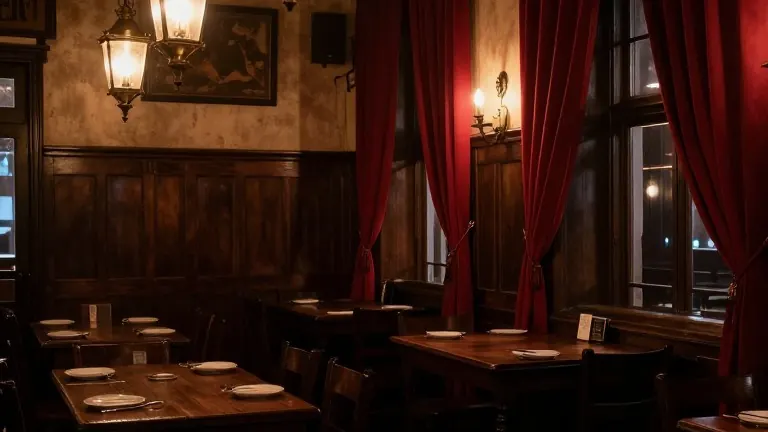
In 1901, Ranji Smile opened Omar Khayyam at 325 Fifth Avenue in New York. The venue was likely the first Indian restaurant in the United States. It closed within a year.
Smile arrived in New York in the summer of 1899 after sailing from London. He worked as a curry cook at the Cecil and Savoy hotels before joining Sherry's Restaurant on Fifth Avenue. Louis Sherry, the owner of Sherry's, invited Smile to bring his culinary skills to the United States. He adopted the first name Joe after passing through Ellis Island.
At Sherry's, Smile gained fame for his showmanship. He wore a satin coat and a blue silk turban. He greeted customers with a salaam and asked if they preferred their curry hot or mild. Newspapers published photos of him, and headlines claimed that New York women went wild over him. Patrons sought out his dishes, including Bombay duck and a creation called Lettuce Ceylon.
Smile left Sherry's in 1901 to launch his own establishment. He secured financial backing from Roland R. Conklin, a financier and inventor of an early motorhome. Omar Khayyam featured Indian draperies, hanging lanterns, and staff including waiters in turbans and a group of Indian musicians. The location was prime real estate, one block from the original Waldorf-Astoria Hotel.
The restaurant failed to attract a steady crowd. The New York Sun reported that diners had tired of Indian fare and viewed it as a passing fad. Smile's public image began to change as he claimed to be a prince, the son of the emir of Baluchistan. Before opening Omar Khayyam, he visited Bombay and claimed he was a guest at the upcoming coronation of King Edward VII. He recruited a staff that included valets, a dancing girl, and mahouts to drive elephants.
A federal case alleged that Smile illegally trafficked this staff into the United States to work at his restaurant. He eventually evaded deportation, though many of his staff members were not as lucky. He continued to marry young American women, claiming that Indian food served as a secret elixir for female beauty. He also performed cooking demonstrations across the country, including in Washington, D.C., and Chicago.
Smile's legal issues included the forcible confinement of a dancing girl and a dispute over a bill at an Italian restaurant in Manhattan. By the 1920s, he listed his occupation as a merchant and appeared to have stopped cooking. The last known record of him dates to 1937, when his fourth or fifth wife filed for an annulment in the New York Supreme Court. She noted that her husband had absconded.
Other immigrants followed Smile's lead. Saint Nihal Singh published Indian recipes in the Chicago Daily Tribune in 1909. He suggested using hamburger meat as a substitute for meat in pilaf. KY Kira, a man from Ceylon, opened the Ceylon India Inn in Harlem in 1913. That restaurant remained in business until the late 1980s and served Broadway and Hollywood stars.
Dinyar Patel, an associate professor of history at SPJIMR in Mumbai, notes that Smile paved the way for the popularization of Indian cuisine in America. The brief existence of Omar Khayyam preceded the thousands of Indian eateries now operating in the United States.
Source: BBC News