Smoke Days at U.S. Schools Jumped From 6.8 to 54.4 Over 17 Years
An Oregon State University study tracked air quality data at public schools and childcare centers nationwide from 2006 through 2023.
By Jacob Reynolds ·
Public schools in the United States averaged 6.8 days of wildfire smoke exposure per year in 2006. By 2023, that figure reached 54.4 days, according to a study published earlier this month in Environmental Research by researchers at Oregon State University's College of Health.
The analysis covered national air quality data from 2006 through 2023. Childcare centers recorded a parallel increase, with average annual smoke days climbing from 9.4 to 112.2 over the same period. Molly Kile, a lead researcher and environmental epidemiologist at Oregon State, said children collectively experience billions of days of smoky air each year.
The number of U.S. wildfires per year has held near 70,000, but fire intensity has risen. In Oregon, wildfires burned 2.5 million acres this summer, surpassing the 1.9 million acres recorded in 2024, according to the Oregon Department of Forestry. Kile said smoke does not stay in the West. Fine particulate matter travels hundreds or thousands of miles, and prevailing winds carry it eastward, she said.
Wildfire smoke contains PM2.5, particles small enough to reach deep lung tissue and enter the bloodstream. PM2.5 is a known cause of cardiovascular disease and is linked to the onset and worsening of respiratory illness. Wildfires account for almost half of all PM2.5 measured across the country. Staying indoors does not guarantee lower exposure, Kile said, because indoor conditions vary by building.
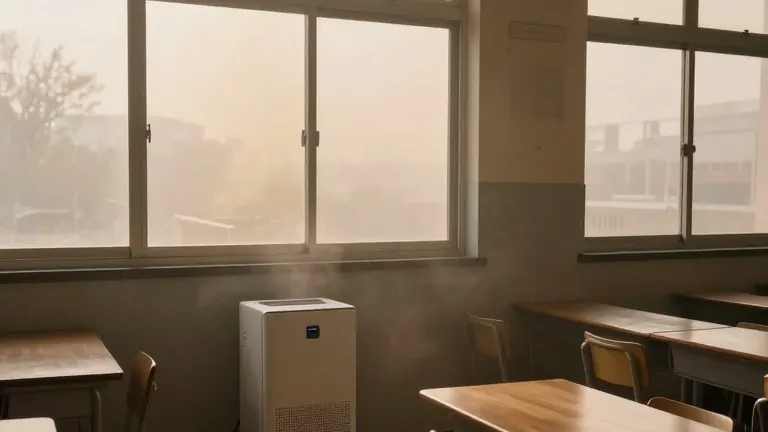
Kile reported that some schools recorded higher indoor PM2.5 concentrations than nearby outdoor sensors on smoke days. She pointed to HVAC upgrades and portable HEPA filters as approaches to reducing indoor exposure, noting the former can be expensive while the latter can be more affordable. Stephanie Foster, corresponding author and program manager at Samaritan Health Services' Research Development Office, said educational facilities can coordinate preparedness plans, filtration, monitoring and activity changes during smoke events to lower exposure.
Oregon State University's College of Health published the study in Environmental Research earlier this month.
Source: Portland Tribune