Netanyahu Bloc Holds 54 Seats, Eisenkot 49, as Arab Parties Sit on 17
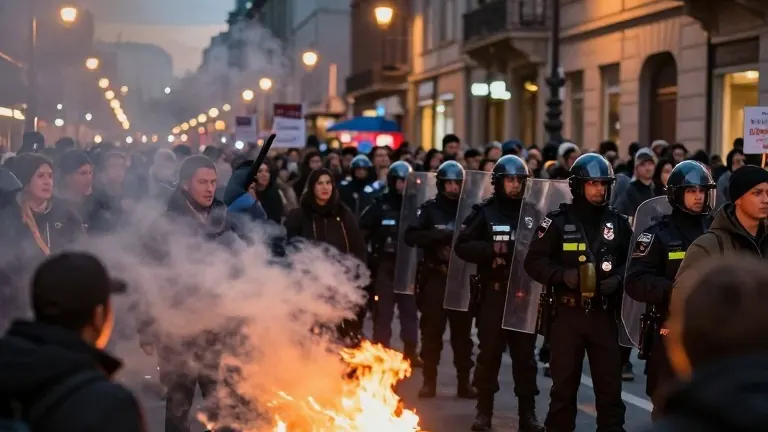
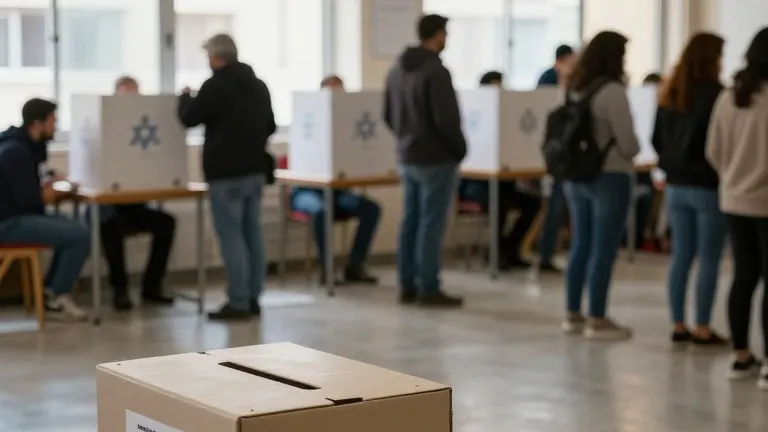
Israel's Tuesday vote drew 77.7 percent turnout, the highest since 1999, but neither alliance reached the 61 seats needed to govern.
By Ana Salazar ·

Israeli Prime Minister Benjamin Netanyahu's coalition held 54 seats and opposition leader Gadi Eisenkot's alliance held 49 on Wednesday afternoon, with nearly 80 percent of ballots counted and neither camp clearing the 61-seat threshold for a majority in the 120-seat Knesset. The Islamist Ra'am party and the Joint List, both Arab-dominated, together held 17 seats.
Those 17 seats are enough to put either bloc over the line for a majority to choose a speaker, pass laws and assemble a government. The full count is due by Friday, with official results scheduled for publication on November 4.
Turnout reached 77.7 percent of eligible voters, the highest level since 1999. Among Palestinian citizens of Israel, who make up one-fifth of the population, participation ran near 80 percent by some estimates, also above the 1999 mark. Roi Zur, a lecturer at Essex University who studies Israeli voting behaviour, said that having only two well-organised lists improved mobilisation, particularly for Ra'am, which he said ran a more efficient campaign than usual.
President Isaac Herzog will now consult party leaders on their preferred prime minister and task the candidate he judges most likely to succeed. That person holds a 28-day mandate, extendable by 14 days; failure returns the mandate to another member of parliament, and a second failure dissolves the Knesset and triggers a new election with the current cabinet serving in a caretaker role.
Neither bloc has committed to working with the Arab parties. Avigdor Lieberman ruled out a coalition with Arab or ultra-Orthodox parties, and Naftali Bennett, whose 2021-22 government included Ra'am, said there was "no mandate" to govern with Arab parties after October 7. Likud petitioned to bar the Joint List from the ballot and made unsubstantiated claims that the opposition planned to rely on Arab votes.
Daniel Levy, a former government adviser, said the opposition "got what they deserved" and laid out four possibilities: a fresh election, Likud recruiting defectors from the opposition's right flank, a Netanyahu-led unity government drawing on the right, or an Eisenkot-led minority government with Arab backing. He rated the last as unlikely, while adding that the Arab parties' price would not be particularly high.
Mairav Zonszein of the Crisis Group said Eisenkot would find it very hard to work with Netanyahu's camp given his demand for a state commission of inquiry into October 7 and a universal draft covering the ultra-Orthodox. Daniel Bar Tal, a political psychologist at Tel Aviv University, said many Israelis "want change but do not want to cooperate with Arab parties."
Levy and others have raised the possibility that the government could seek a military escalation, potentially against Iran, as cover for an emergency government. The outgoing coalition is centred on Netanyahu's Likud party; Eisenkot's alliance spans Yair Golan's Democrats to Lieberman's Yisrael Beiteinu.
Source: Al Jazeera