Israel's Palestinian voters face a hard choice
As elections approach, 20% of the population weigh a vote that may not alter their daily reality.
By Jacob Reynolds ·
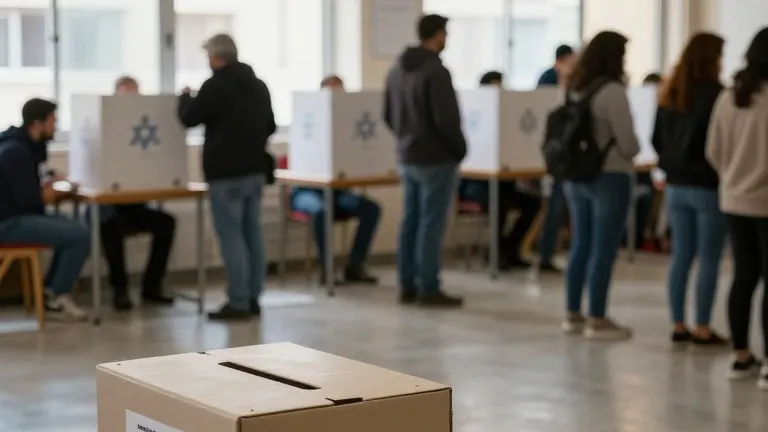
Israelis go to the polls on October 27 to choose between Prime Minister Benjamin Netanyahu and opposition leader Gadi Eisenkot. For the country's Palestinian citizens, who constitute 20% of the total population, the decision carries a different weight. They must decide if voting in a system that has not changed their status is worth the effort.
The political center in Israel has moved toward the far right. This shift has increased pressure on Palestinian communities, who face more violence and encroaching settlements. The government has also expanded policing and militarized civilian life, causing anxiety among the population.
The main obstacle for these voters is the lack of a clear alternative. The anti-Netanyahu bloc does not appear ready to reverse current policies. Consequently, many Palestinian citizens question whether their ballot can make a tangible difference.
These citizens have held Israeli passports since 1952. They gained the right to vote after martial law ended in 1966. However, this formal citizenship has not translated into full equality. They continue to face discriminatory laws and underfunded services.
The state has often relied on criminal networks to manage Palestinian communities. This strategy has led to shootings and arson that law enforcement has frequently ignored. The problem has worsened as organized crime groups have acquired advanced weapons. These weapons were reportedly stolen from army stockpiles or smuggled across borders.
Settlement expansion is accelerating next to Palestinian towns. In August, Finance Minister Bezalel Smotrich announced a plan to add one million Jewish residents to the Naqab and northern Israel. The proposal includes 40 new settlements, dozens of farms, and hundreds of thousands of new housing units.
National Security Minister Itamar Ben-Gvir is also reshaping security. He created a National Guard to handle protests in Palestinian towns. His ministry has issued 300,000 gun licenses since he took office. These steps increase the role of armed civilian groups in local enforcement.
The United Arab List, led by Mansour Abbas, has long supported joining the opposition to stop the far right. In 2021, the party joined a government that excluded Netanyahu. That coalition collapsed without changing conditions for Palestinian citizens. In 2022, party member Mazen Ghnaim admitted he could not push through beneficial policies despite being in power.
Many Palestinian leaders believe that voting alone is not enough. They argue for a more radical political response that challenges the underlying structures of discrimination. This includes reforming the High Follow-Up Committee and building stronger grassroots organizations.
The fate of Palestinian citizens is linked to the fate of Palestinians in other regions. Leaders must embrace this connection to build a different future through new institutions and collective action.
Source: Al Jazeera